Photos | The D.C. Jazz Loft Series at the DC Jazz Festival: Three nights of powerful improv and art

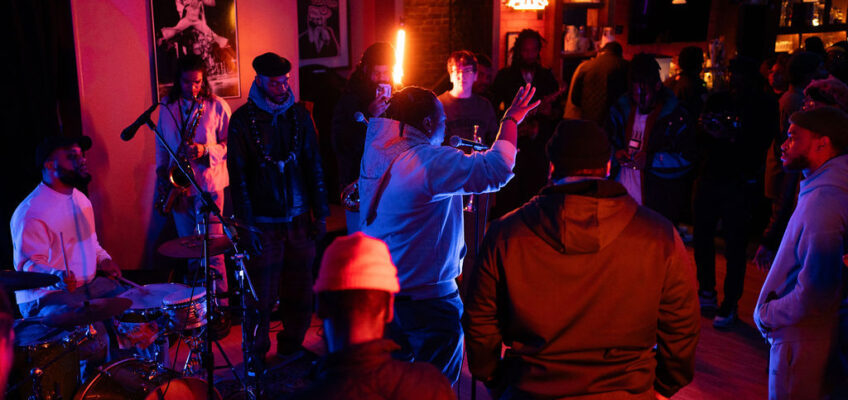
Jamire Williams prepares for ERIMAJ’s performance at the D.C. Jazz Loft Blowout Show on June 15. Elliot Blumberg/CapitalBop

by Giovanni Russonello
Editorial board

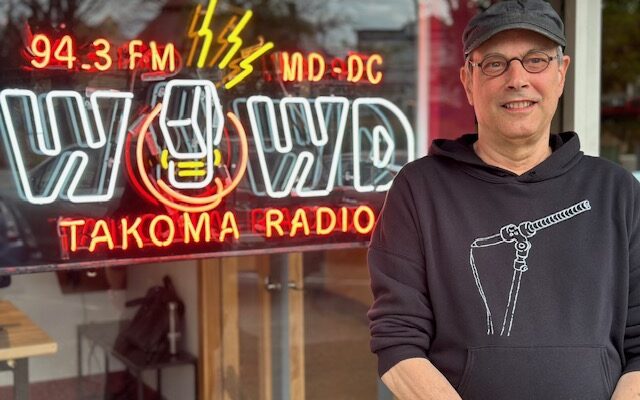
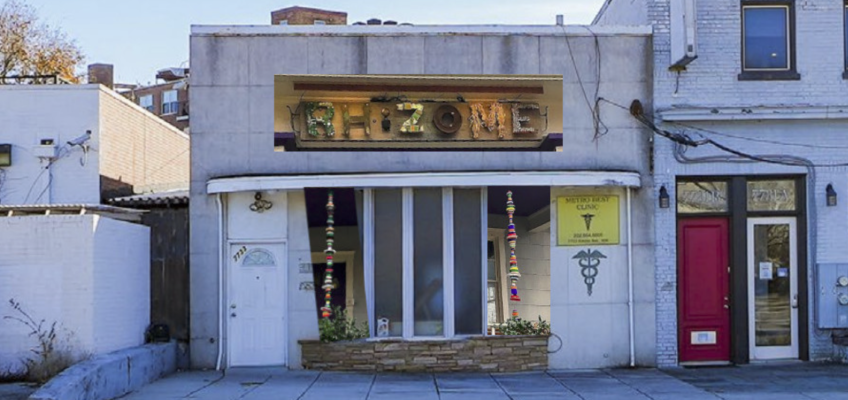
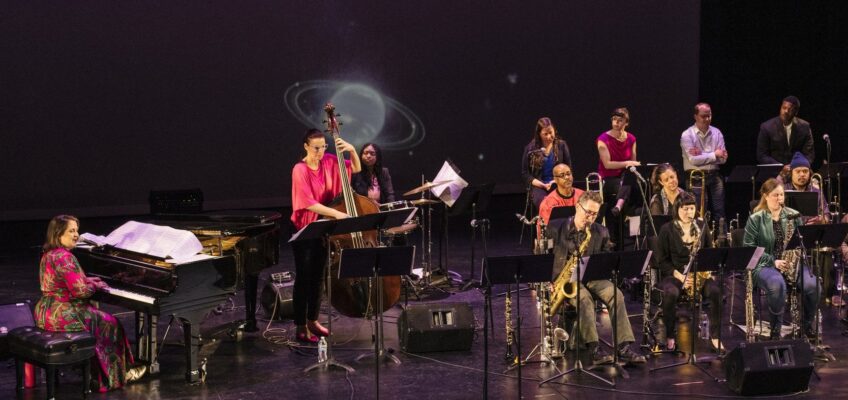
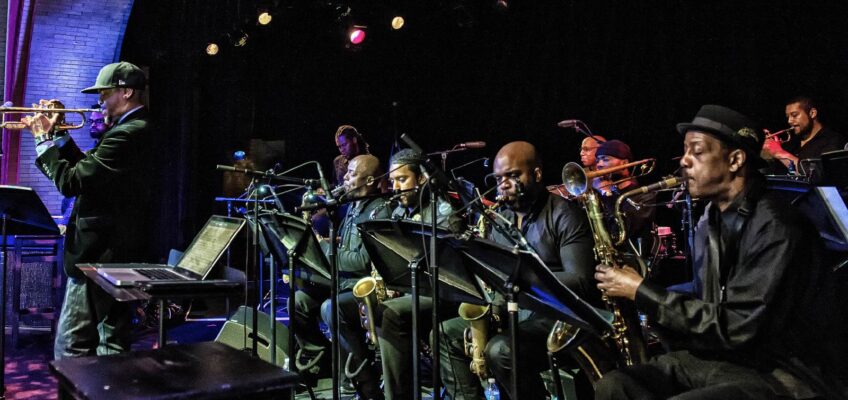
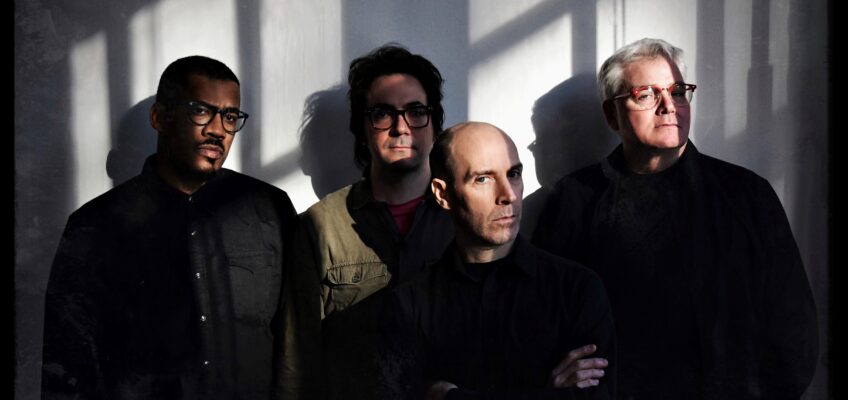
The DC Jazz Festival spent the past two weeks drawing some tremendous jazz out of the District’s woodwork, and what a festival it was. From our biased standpoint, the highlight was CapitalBop’s very own, third annual D.C. Jazz Loft Series. It culminated on Saturday night in a jam-packed Blowout Show on H Street, where the great Karriem Riggins and ERIMAJ headlined at a pop-up dance hall and art gallery featuring Jati Lindsay’s inimitable jazz photographs.

The Washington Post has a kind review zeroing in on the statement that our Blowout Show made — by presenting these unbelievable artists, we aimed to show D.C. something about the unbreakable ties between present-day jazz and the parallel innovators in hip-hop, R&B and other popular genres. But hey, from the crowd’s resounding response and the awesome vibe in the place, it seems like you folks didn’t need to be told.

Earlier in the series, we set up a double-exhibition at Union Arts and Manufacturing (Four Days in May and DECON/RECON), in conjunction with a concert by the legendary Peter Brötzmann and Joe McPhee, stalwart improvisers who draw sounds from their saxophones that you’ve never imagined. They shared the bill with D.C.’s own Anthony Pirog. And the day after that, Gerald Cleaver’s Black Host — a band that’s supporting a fabulous and broadly acclaimed debut album, which sounds like a kitchen sink’s worth of alternative music, from death metal to soulful free jazz to punk rock — played amidst a remarkable exhibition at the Fridge, along with Brian Settles & Central Union.

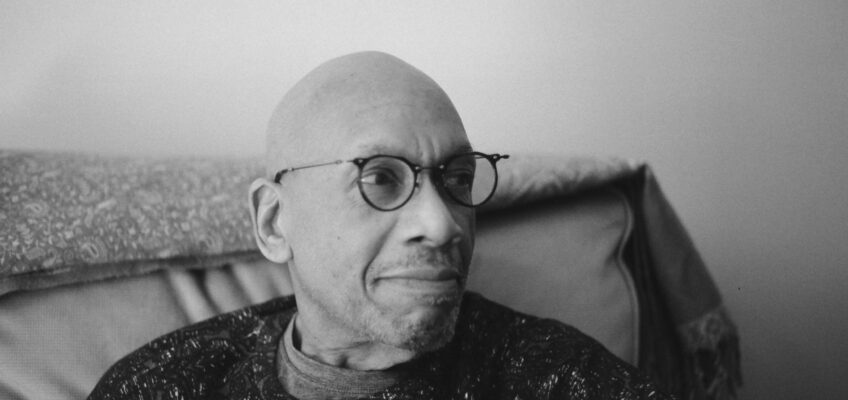
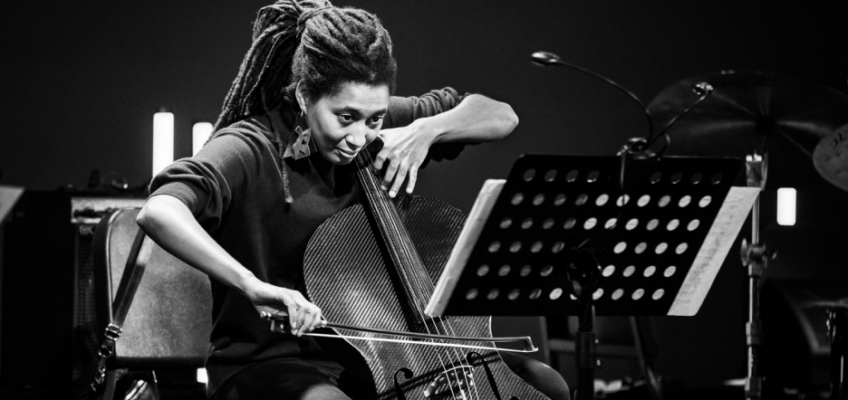
Some beautiful photos from all those shows are below, taken by the photographers Paul Bothwell and Elliot Blumberg. To keep up with future D.C. Jazz Loft shows like these, subscribe to our email list, like us on Facebook and follow us on Twitter. Continue reading

Live review | A dancing photographer, in total command of the mic: Buika dazzles at the Howard

Buika performed as part of the DC Jazz Festival’s programming at the Howard Theatre. Courtesy Javi Rojo

by Ken Avis
CapitalBop contributor

If the definition of jazz includes passion, virtuosity, and expression, then Guinean-Spanish vocalist Buika’s impressive tour kickoff at the DC Jazz Festival more than met expectations. At the end of last night’s show, the foyer of the Howard Theatre buzzed with the thrill of an audience transported. Buika’s exhilarating blend of flamenco vocal stylings with Afro-Cuban influences had taken them around the world. (It’s little wonder that she earned inclusion in NPR’s 50 Great Voices list, and collaborated with artists such as Chucho Valdez, Chick Corea, Anoushka Shankar, Seal, Nelly Furtado and Pat Metheny

 
Backed only by the elegant and rhythmical accompaniment of Iván “Melón” Lewis on piano and Ramón Porrina on percussion, Buika’s emotional intensity and dynamic range captivated the capacity audience. The simple musical setting provided a perfect foil for that voice. But had she been backed by a full orchestra, frankly, the voice would still have been the unimpeachable focus – soaring and delicate, sweet yet gritty. Continue reading

Musician profile | Baltimore native Cyrus Chestnut relishes his gift — and passes it on to students

Cyrus Chestnut performs tonight at the Hamilton; a band comprised of his students will open for him. Courtesy Thomas Faivre-Duboz/flickr

by John Cook
CapitalBop contributor

For the pianist Cyrus Chestnut, music is a lifelong gift, developed through the combination of environment, study, practice, experience and a joy of expression that he generously shares. Born to a musical family, he was already seeking to emulate his piano-playing father by the age of two. “I always liked the music,” Chestnut said in a recent interview. “And I just wanted to climb up to the piano and do what he did.” That enthusiasm earned him lessons at the family’s Baltimore home, followed by professional lessons at the age of five, playing in church at seven, enrolling in Peabody Preparatory at nine, and ultimately his graduation from the Berklee College of Music. Today, Chestnut is seen as one of the most masterful practitioners of classic jazz piano technique. And he relishes both the opportunity to display his talents, and to transmit them to future generations — as he will be doing tonight at the Hamilton, when he appears with the Berklee Sextet.


Early in Chestnut’s personal journey, a distinct musical foundation and personal vision were formed. When he was nine, “at a five-and-dime store I saw this record with a picture of a man playing the piano whose name was Thelonious Monk,” he said. “I had no idea who he was but I just liked it and so I started to listen to more music as such…. The more I listened the more I got into it.” His love for listening and ability to absorb came naturally; even from his earliest days in church, he “was learning the principles of playing music. At that age I didn’t realize it but I was learning a lot about ear training and accompaniment and such that became part of my ongoing development,” he said.

His academic pursuits and classical background reinforced a strict practice regimen (which he carries with him to this day) and enabled him to deeply study the masters of jazz, gospel and classical music that informed his progression. While acknowledging the importance that an education in the technical aspects had for him, Chestnut also cites the importance of experiences. Coming up in Baltimore, he immediately cited the importance of the Monday night jam sessions at Sportsmen’s Lounge, as well as the many opportunities to listen and play along the Baltimore-Washington corridor. “Mickey Fields, Andy Ennis, John Lamkin, Steve Novosel, Buck Hill — being able to hear them and then later on being able to work with them was special. Every time you play you learn something,” he said. “Especially being around Steve Novosel, you leave any situation learning something.” Post-graduation, the trombonist Phil Wilson invited him on a formative State Department tour of Central and South America; it launched Chestnut’s career, and from then on he accompanied nationally and internationally touring artists. Continue reading

Reflections on the DC Jazz Festival at Millennium Stage: The universal language of jazz

The Millenium Stage tends to draw packed crowds for exploratory concerts, as it did last week for Lenny White’s performance. John Cook/CapitalBop

by John Cook
CapitalBop contributor

I chose to spend the first two nights of my condensed voyage through the 2013 DC Jazz Festival at the District’s most cost-effective venue, if you’re looking to expand your musical horizons: The Kennedy Center’s Millennium Stage, which usually features jazz several times a month, part of its wide and eclectic range of nightly programming. It is the city’s only 365-day-a-year free performance series.

One of the Millennium Stage’s major strengths is that it provides a very large platform to a variety of lesser-known artists who, however much they may merit them would rarely have opportunities of that scale.  The size of the usual crowd there is not without some disadvantages; many of the attendees on any given night have probably ended up there somewhat randomly, and aren’t always fully attentive to the particular performance (though that tends to be most problematic for unamplified classical programs). The cavernous and bustling open space of the center’s Grand Foyer can present challenges, too (sonic as well as ambient), but this remains the only place in town that will – or has the financial support to – book many of the artists that play there. The generally strict limitation to a one-hour performance can be a bit irksome, but this seems the nature of the environment. That said, it is an economical way to dramatically widen one’s musical horizons – and some of the performances there are magic.


Beka Gochiashvili, Daryl Johns and Lenny White. John Cook/CapitalBop

The Millennium Stage’s opening-night contribution to the DC Jazz Festival on Wednesday presented Lenny White’s New Voices: a straight-ahead acoustic trio featuring some very young talents, in the 17-year-old pianist Beka Gochiashvili, from the Republic of Georgia, and 16-year old bassist Daryl Johns. White’s spry proteges were both very skilled and seemingly well-traveled (Gochiashvili has done already done several concerts with White, including a local appearance at the Howard Theatre last year). The group quickly got comfortable and as the show progressed they opened up and took off. The results demonstrated that ultimately there is no substitute for learning on the bandstand, nor for the communication with the masters of the tradition that becomes available there. With roughly half the compositions his, Gochiashvili proved his ability to write convincing new material that reflected the traditions they explored yet also left room to be given more life through the improvisational exchanges between band members that propelled the performance to a higher level. White was obviously very pleased with being able to play with this band and the joy mutually radiating from the stage touched the audience as well. While most in attendance had come to hear White, they seemed uniformly impressed by his compatriots. Continue reading

Do festivals grow the jazz audience?


Sriram Gopal
Swing District


The DC Jazz Festival, currently in full swing, is now in its ninth year. This time around, it once again boasts a lineup of world-class talent with performances taking place across all four quadrants of our nation’s capital. Many values to staging a jazz festival are obvious. The concentration of talent allows for creative programming options, and also permits attendees to experience many events in a compressed time span. And there is the intangible benefit of consuming art and entertainment in a shared setting, with thousands of others.

This column, however, focuses on a broader quandary: whether jazz festivals really serve to grow the jazz audience, or if they are simply places for the already converted to congregate. As it turns out, this is not an easy thing to answer. First, for the purposes of this discussion, we’ll break out major festivals into two categories – those that focus exclusively on jazz, and those that feature “crossover” acts or even major pop and rock acts. The primary question here is whether either one of these models serves to bring people to jazz; identifying which model is more effective is secondary.

 
Our hometown festival has largely remained in the first category, limiting its scope to artists that would be categorized as jazz by any music vendor (although this year’s DC Jazz Festival performance by the Roots represents something of a departure). Charlie Fishman, the DC Jazz Festival’s executive producer, looks to his own history to explain why this is the case. Fishman spent several years as Dizzy Gillespie’s manager toward the end of that jazz icon’s life, and he sees the festival as a means to further Gillespie’s ethos. Fishman also points to a compliment given to him by piano great Ellis Marsalis: After receiving an award from the festival, Marsalis made a point of thanking Fishman for keeping the festival 100 percent jazz. Continue reading

DC Jazz Festival 2013: CapitalBop’s guide

Buika performs at the Howard Theatre during the DC Jazz Festival. Courtesy Bernardo Doral

by Giovanni Russonello
Editorial board

The DC Jazz Festival, which launches today and runs through June 16, is gliding into town on a wave of temperate weather, ready to draw us onto the streets and into one of its dozens of venues. The festival is really a seasonal celebration of a greater, perennial jazz ecosystem. But the stars visiting town for it this year are many – from Roy Hargrove and Cyrus Chestnut (two familiar faces at this festival) to Roy Haynes, Terri Lyne Carrington and John McLaughlin.

 
The festival’s predilection for bubbling Afro-Cuban jazz is on full display again this year. The prerogative is largely from its producer, Charlie Fishman, who for years was the manager of Dizzy Gillespie — one of the first North American jazz musicians to embrace Latin dance music. With sets from Arturo O’Farrill, Paquito D’Rivera and Poncho Sanchez, there’s lots of varieties of danceability to choose from.

For this year’s festival, CapitalBop will run nonstop coverage, which you can keep up with at capitalbop.com/dcjf. We’ll post articles every day, ranging from artist interviews and show previews to live reviews and photo essays. Our photographer, Carlyle V. Smith, will also be posting live updates after each night of the festival, which you can find on Flickr. For a complete schedule and more information, visit the DC Jazz Festival’s website.

Wednesday, June 5 – Nicholas Payton in conversation with E. Ethelbert Miller, Busboys and Poets, 6 p.m.
Jazz is about intellectual provocation, kind of, so maybe a talk between two important thinkers about jazz and resistance is a smart way to dive into this festival. In November 2011, the esteemed trumpeter Nicholas Payton fired off a graceful but hard-charging post called “On Why Jazz Isn’t Cool Anymore;” ever since, his blog has been known for an unflagging dedication to pointing out some of the more frustrating elements of jazz’s business operation and myth-making machinery, and for coining the term #BAM (for Black American Music). Here he sits down for a conversation with the D.C.-based poet, memoirist and arts advocate E. Ethelbert Miller — himself an incisive voice who takes aggressive empathy seriously — and the D.C. drumming institution Nasar Abadey. (Payton performs the following night at the Hamilton.) Free.

Friday, June 7 – Stefon Harris & Blackout, The Hamilton, 8:30 p.m.
Stefon Harris hails from upstate New York, but with two District natives in his band, and given his commitment to exploring rugged funk with a shiver of 21st-century energy, there’s no way that D.C. go-go wouldn’t seep into the mix. Harris plays the vibraphone with a masterful flair, recalling Milt Jackson, but his polished bluesiness never sits still. In Blackout he’s joined by a stellar cast: Casey Benjamin on alto saxophone and vocoder, Marc Cary on piano and keyboard, Ben Williams on bass and Terreon Gully on drums. Tickets $25-35.

Sunday, June 9 – Arturo O’Farrill & the Afro-Latin Jazz Orchestra (feat. Anat Cohen & Steven Bernstein), Sixth & I Synagogue, 7 p.m.
Arturo O’Farrill leads one of the tightest and iron-hottest bands in New York City: the 18-piece Afro-Latin Jazz Orchestra. In weekly shows at Birdland, it has the same ability to trip up your mind and speed up your heart that belonged to a few mid-century jazz big bands. In this program, klutzily titled “From Bagels to Bongos,” the Cuban music-centric band is joined by the clarinetist Anat Cohen and the trumpeter Steven Bernstein, the former representing Israel, the other Brooklyn, presumably. Tickets $25 in advance, $30 at the door.

Wednesday, June 12 – Buika, Howard Theatre, 8 p.m.
The strain, the contorted catharsis of flamenco singing, comes through with a proud bounce on the lips of Concha Buika, a singer of Equatorial Guinean parentage and Spanish gitano upbringing. She’s some sort of jazz singer, I guess, and has worked with Afro-Cuban jazz giant Chucho Valdés, but really she’s an earthy hit of transcendence. On her latest album, La Noche Más Larga, ranges from a classic Cuban tune by Ernesto Lecuona originals to to jazz standards by Abbey Lincoln and Billie Holiday. Tickets $35, $40 day of show.

Thursday, June 13 – Fred Foss Quartet, Dorothy I. Height/Benning Neighborhood Library, 6 p.m.
The tenor saxophonist Fred Foss has been an important performer and educator in the D.C. region for decades. His straight-ahead bop playing – searing, laden with conviction and bearing the indelible influence of John Coltrane’s innovations – tends to invigorate and surprise. Here he performs as part of the East River JazzFest, a subset of the DC Jazz Festival that presents first-rate jazz in Anacostia and other points east of the river, often free of charge. Free.

Friday, June 14 – Sunday, June 16 :: Pharoah Sanders, Bohemian Caverns, 8:30 & 10:30 p.m.
The 72-year-old saxophonist Pharoah Sanders will always be best known for his 1969 LP, Karma, and specifically its half-hour-long first track: “The Creator Has a Master Plan.” Built around two simple chords, the song sojourns in a screeching and pleading free-jazz territory parallel to that of Albert Ayler and Charles Gayle – only with a sturdy, grooving backup band. More than 40 years since he recorded “Master Plan,” he continues to dazzle with his flights of free-meets-form – and on a ballad he can evoke Coltrane, his former employer, better than anyone. $35 cover online, $40 at the door, no minimum.

Editor’s note: CapitalBop is putting on our own series at the festival, but for this preview we stuck to other shows. You can find out about our D.C. Jazz Loft Series here.

Weekend in Jazz | 5.31-6.2: Horns and loops at Union Arts, jazz harp at Bohemian Caverns & more

Syrinx Effect will offer an arresting admixture of acoustic and electric sounds on Friday night at Union Arts. Courtesy facebook.com/TheSyrinxEffect

by Giovanni Russonello
Editorial board

This weekend, some non-traditional jazz concepts are getting their due in the District, compliments of some extremely talented, up-and-coming female instrumentalists. Syrinx Effect, playing Friday night at Union Arts, is a duo that explores the interplay between classic jazz horn harmonies and effects and loop pedals. And Brandee Younger (whom I interviewed earlier this week) is at Bohemian Caverns with her singular approach to the jazz harp. At Twins Jazz, there’s a less stratospheric but equally worthy offering; the unimpeachable deacon of D.C. piano, Allyn Johnson, presides over a quartet there on Friday and Saturday night.

Also worth mentioning: A small battery of musicians and supporters are trying to convince Ulah Bistro to establish a regular Friday-night gig that could easily fill U Street’s need for a no-cover, late-night jazz hang. Wayne Wilentz’s trio is playing there on Friday in the second installment of a two-week trial run. Go check out the scene, lend your support, and we might end up with a great addition to the U Street scene. There’s info on all those shows and many more in this week’s edition of “Weekend in Jazz.” As always, you can find our full listings at CapitalBop’s D.C. jazz calendar. Our favorites have a label. Happy hunting!

FRIDAY, MAY 31

cb picks:

  • Jeff Antoniuk, Westminster Presbyterian, 6 p.m.
  • Syrinx Effect w/Sarah Hughes & Amy Bormet, Union Arts, 8 p.m.
  • Allyn Johnson Quartet, Twins Jazz, 8 & 10 p.m.
  • Brandee Younger, Bohemian Caverns, 8:30 & 10:30 p.m.
  • Donvonte McCoy, 18th Street Lounge, 10:30 p.m.

Jeff Antoniuk, Westminster Presbyterian Church, 6 p.m. | For this week’s Jazz Night at Westminster, the wide-toned tenor saxophonist Jeff Antoniuk takes on the music of two essential iconoclasts of jazz composition: Charles Mingus and Thelonious Monk. His band includes Wade Beach on piano, Tom Baldwin on bass, Tony Martucci on drums and Denyce Pearson on vocals. $5 cover for adults, no cover for attendees under 16, no minimum. View event on calendar | Westminster Presbyterian Church website Continue reading

Interview | Brandee Younger: From Handel to R Kelly to Alice Coltrane – and now, something totally new

Brandee Younger brings her fresh take on the jazz harp to Bohemian Caverns this weekend. Courtesy lightofmine.blogspot.com

by Giovanni Russonello
Editorial board

The jazz harpist Brandee Younger knows the strengths of her instrument: its trembling, watery consistency, the way it easily fills vast harmonic space. And she knows the limits – namely the way that its pedal system can keep things frustratingly diatonic, and make jazz harmonies tough. Oh, and good luck lugging a harp to a jam session. (Younger’s done it — not a pleasant trip.)

But Younger, who started out taking classical lessons as a child but almost immediately started transposing R Kelly songs onto the harp, has a way of making things work. In the past few years, she’s moved a few steps further: Modern jazz picks up a lot from welding outside musics with its own history — particularly a sensitivity to tonal range, and ideas about how polyrhythms can team up with textures to make a rugged thatch. Younger embodies all that, and puts the harp right up there as an addition to the palette of freeform, hip-hop-infused modern jazz.

She’ll appear with an expert band this weekend at her Bohemian Caverns debut, performing Friday and Saturday nights. We caught up this week to discuss how she made the transition to jazz on an uncommon instrument, the legacy of figures like Alice Coltrane and Dorothy Ashby, and the way that bucking expectations has helped her find her voice.

CapitalBop: Did you always start out wanting to do jazz? What was the path you took to the music?

Brandee Younger: There was a woman who worked with my parents, who played harp…. They would bring me over to her house. I played flute so we played some duets. The interest was there…. I was about 12 years old… They were thinking ahead to what I could do to get a scholarship to [college]…. Continue reading

Weekend in Jazz | 5.24-5.26: New beginnings on U St., and Baltimore’s Lafayette Gilchrist performs

Lafayette Gilchrist, a Baltimore pianist who blends blues and gospel with the avant-garde, performs this weekend at Twins. Courtesy jlectric/flickr

by Giovanni Russonello
Editorial board

U Street is getting a shot of new jazz enterprises this weekend. Bohemian Caverns is launching a weekly Sunday jazz brunch, with live music starting at noon, and Ulah Bistro is testing the waters for a possible regular engagement on Friday nights, featuring the Wayne Wilentz Trio. It’s tough to say how these ventures will turn out, but they’re worth checking out and supporting. Also, the excellent and always-brightly reactive pianist Lafayette Gilchrist brings his trio to Twins Jazz, and Blues Alley is spotlighting a variety of strong local female vocalists all weekend. There’s info on all those shows and many more in this week’s edition of “Weekend in Jazz.” As always, you can find our full listings at CapitalBop’s D.C. jazz calendar. Our favorites have a label. Happy hunting!

FRIDAY, MAY 24

cb picks:

  • Lena Seikaly, Blues Alley, 8 & 10 p.m.
  • Lafayette Gilchrist Trio, Twins Jazz, 8 & 10 p.m.
  • Curtis Lundy Quartet, Bohemian Caverns, 8:30 & 10:30 p.m.
  • Donvonte McCoy, 18th Street Lounge, 10:30 p.m.

Greg Lamont, Westminster Presbyterian Church, 6 p.m. | Greg Lamont is a jazz pianist and singer with an affinity for the Great American Songbook. Here he performs with his quartet, featuring Donnie West on bass, Ben Secundy on drums and LeRon Young on guitar and vocals. $5 cover for adults, no cover for attendees under 16, no minimum. View event on calendar | Westminster Presbyterian Church website Continue reading

Interview | Daisy Castro, 16-year-old violinist, finds inspiration in the classic Gypsy jazz sound

Daisy Castro performs tonight at Strathmore in her final performance as an artist in residence there. Courtesy Daisy Castro

by Ken Avis
CapitalBop contributor

At the age of six, Daisy Castro fell in love with the music of the guitarist Django Reinhardt and the violinist Stephan Grappelli during a visit to France. Their music had startled the world some 70 years ago, merging the influence of American jazz of the ‘30’s with the bal musette sound of Paris. The music – swinging from melancholic to exuberant ­– continues to enrapture a growing number of fans around the world; it’s played at an ever-increasing number of Djangofests, bringing together musicians of all ages and cultures.

Seven years later, at the age of 13, Castro returned to play her own version of this jazz manouche at Festival Django Reinhardt, the legendary annual gathering in Samois sur Seine, France that is part music festival and part pilgrimage to the village where Django spent his final years. Castro’s elegant violin playing, loping but precise and preternaturally tuned in to the Gypsy jazz tradition, has taken her to such legendary venues as New York’s Birdland, D.C.’s Blues Alley and Birchmere, and others. She’s performed with the stars of Gypsy jazz: Stephane Wrembel, Stochelo Rosenberg, Hot Club of Detroit, to name a few.

Now 16, Castro tonight will complete her year as one of the Strathmore’s artists in residence, with the last of her series of concerts at the Strathmore Mansion. She played with Swing Guitars DC at a standing-room-only show at the Mansion earlier this month; guitarists Marek Wojcik and Kevin Doran and bassist Jay Miles provided flawless accompaniment, bringing the Strathmore audience to its feet. They will be back together on May 22, when the band will play music from her new CD, Déviation – and no, it’s not even her first! I caught up with Castro after her recent Strathmore show. Continue reading